Tree removal cost in Australia
Most residential tree removals land between $1,500 and $3,500. But before any of that matters: across most of Australia, owning the land doesn't mean you're allowed to remove the tree standing on it.
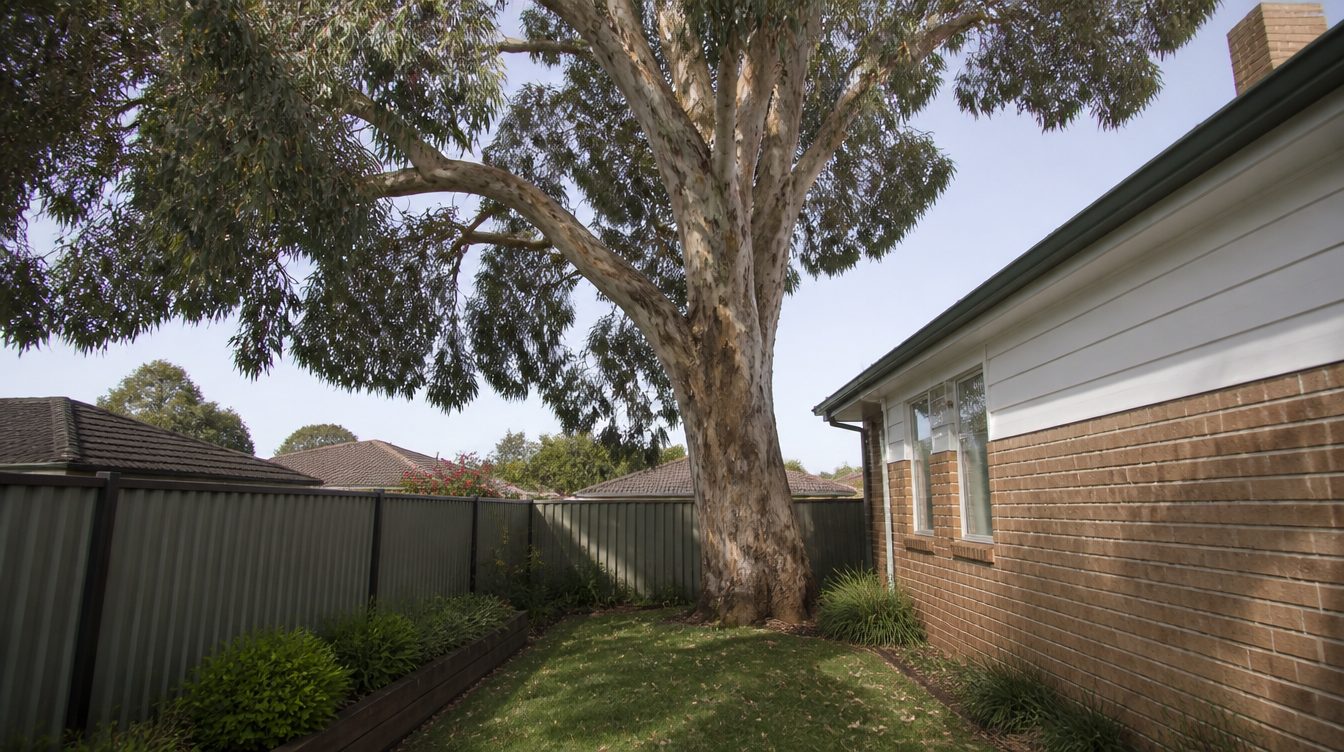
Start here: you may not be allowed to
Most cost guides open with prices. This one can't, because the first question isn't what a tree costs to remove — it's whether you're permitted to remove it at all.
Across most of Australia, councils protect trees through tree preservation orders or local environment plans, typically triggered by height, trunk circumference, or species. Owning the land does not automatically entitle you to remove the tree standing on it. In NSW, penalties for unlawful removal are among the more significant in planning law.
The costs attached to that process:
- Permit application — commonly $50 to $350, depending on council
- Arborist report, where the council requires one to justify removal — roughly $300 to $1,200
An arborist report is the step most people don't see coming. If your council wants evidence that a tree is diseased, structurally unsound or genuinely hazardous, you're paying a qualified arborist to assess and document it before anyone is allowed to touch it — and that report is a separate engagement from the removal itself.
Ring your council and ask whether the tree is protected, and what the threshold is in your area. It takes one phone call, it's free, and it determines whether you're planning a job or an application. Dead, dangerous and exempt-species trees are often treated differently — but "I thought it was fine" is not a defence.
What tree removal costs in Australia
Pricing sorts by size, and the bands are wide because the job scales non-linearly — a tree twice as tall is considerably more than twice the work.
- Small, under about 5 metres — roughly $250 to $900
- Medium, roughly 5 to 10 metres — roughly $800 to $2,500
- Large, roughly 10 to 20 metres — roughly $2,000 to $5,000
- Very large, above 20 metres — $5,000 to $15,000 and beyond
The national median sits somewhere around $1,740, with most residential jobs landing between $1,500 and $3,500.
Stump grinding is almost always quoted separately and adds roughly $150 to $800 depending on diameter. If you plan to build or replant in that spot, full extraction rather than grinding is a different and dearer job again. Ask which one you're being quoted for.
A real Coffs Harbour tree job
Keryn had tree work done at her mid north coast home about ten years ago for $4,000. It's one of only three jobs on her list where she obtained multiple quotes, nothing cost more than she expected, and she'd do it the same way again.
Against today's bands, $4,000 a decade ago points to substantial work — large-tree territory, or several trees together. It's also a reminder that tree removal is one of the categories where comparison quotes genuinely matter, because the price reflects an assessment of risk rather than a rate card.
You're not paying for cutting
The single most useful thing to understand about a tree quote is that height is a proxy, not the product. What you're actually paying for is risk, and the things that raise it:
Access. A tree in a front yard with a truck and chipper alongside it is a fundamentally different job from the same tree behind a pool in a narrow backyard, where every section has to be carried out by hand.
What's underneath and beside it. Proximity to the house, a fence, a pool or — worst of all — power lines changes the method entirely. A tree that can be felled is cheap. A tree where every limb must be roped down individually is not.
Whether it can be climbed. Where a tree can't be safely climbed, you're into elevated work platform or crane hire, and that's the single biggest line-item jump in the whole category.
Species and density. Australian hardwoods — ironbark, spotted gum, forest red gum — are dense, heavy and slow to cut, and they generate a large volume of material that has to be processed and removed.
Distance. On rural properties, expect a call-out and travel fee of $100 to $160 on top of the job, and a wait of two to three weeks just to get someone out to quote. Our acreage cost guide covers what distance does to every trade visit.
This is why per-metre pricing doesn't exist in the trade and why an over-the-phone quote is close to meaningless. Nobody can price the risk without standing under the tree.
The cheaper option nobody quotes you: cut and leave
For a tree already on the ground, full removal is not your only choice. There is a much cheaper service that most crews won’t offer because it isn’t how they’re set up: sawing the tree into manageable pieces and leaving every piece where it falls.
David, a horticulturist in regional NSW who ran fallen tree clearing as a one-man operation, priced this work at $194 for any fallen tree up to 4m long, rising by a flat $100 per metre beyond that — $294 at 5m, $494 at 7m, $794 at 10m. Acreage only, and within 20km of his base. He stopped quoting commercially around fifteen years ago and has costed the example to 2026 prices, so treat it as a guide to what the service is worth rather than a rate you can book.
What that buys: everything over 75mm in diameter cut into 300mm lengths, sized for hand-moving and for a domestic fireplace, and all canopy and branches under 75mm cut into 2m lengths so they can be dragged to a burn pile. Nothing is chipped, stacked or taken away.
At that price you still have to drag every 2m canopy length to a burn pile, move and stack every 300mm round, and split anything up to a metre across before it becomes firewood. That is a weekend of physical work, and whether the cheaper option is genuinely cheaper depends entirely on whether you have the time, the fitness and the gear to do it.
It also explains the gap between a sub-$200 quote and a four-figure one. A tree crew brings a minimum of three people, a truck towing a chipper, a separate ute and three chainsaws. One does the tree work, two cart and feed the chipper, someone drives the truck to a dump site when it fills, and two rake the site clean at the end. Everything leaves and you do nothing. Those two quotes aren’t competing — they’re different products, and the higher one is not overpriced.
We’ve published both of his quotes in full, broken down line by line, in inside a tradie’s quote.
Lopping is not pruning
If you're comparing quotes and one is dramatically cheaper, check what's actually being proposed.
Lopping means indiscriminately cutting back large sections of canopy. It's cheap, it's fast, and it's widely regarded as poor arboricultural practice — it damages the tree's health, produces weak regrowth that becomes a hazard later, and in some council areas requires the same approval as removal would.
Proper pruning follows the Australian Standard for pruning of amenity trees (AS 4373), making targeted cuts that the tree can compartmentalise and recover from. It costs more because it takes knowledge and time.
A cheap lopping quote frequently isn't cheap. You pay again in declining tree health, in the removal you eventually need anyway, and potentially in council penalties.
Confirm the arborist is qualified and insured — falling timber damage is not a small claim. Ask whether stump grinding is included or separate. Ask what happens to the green waste. And ask whether the work is pruning to AS 4373 or something less. Get three written quotes; on this job more than most, the range will be wide — our comparison tool will show you the spread.
Frequently asked questions
How much does it cost to remove a tree in Australia?
Roughly $250 to $900 for a small tree under 5 metres, $800 to $2,500 for medium, $2,000 to $5,000 for large, and $5,000 to $15,000+ for very large specimens. The national median is around $1,740, with most residential jobs landing between $1,500 and $3,500. Stump grinding is usually separate at $150 to $800.
Do I need council approval to remove a tree on my own property?
Very often, yes. Most Australian councils protect trees by height, trunk circumference or species, and owning the land doesn't automatically entitle you to remove the tree. Permit fees run $50 to $350 and an arborist report, where required, adds $300 to $1,200. Penalties for unlawful removal in NSW are significant. Check with your council first.
Why are tree quotes so different from each other?
Because you're buying an assessment of risk, not a rate per metre. Access, proximity to buildings and power lines, whether the tree can be safely climbed, and timber density all change the method and therefore the price. It's also why a phone quote isn't reliable — nobody can price the job without seeing the site.
Is tree lopping cheaper than pruning?
Up front, yes, and that's the problem. Lopping cuts back large sections of canopy indiscriminately, damages tree health and produces weak regrowth that becomes a hazard later. Proper pruning follows AS 4373 with targeted cuts. In some council areas lopping requires the same approval as removal.
Is stump removal included?
Usually not. Grinding adds roughly $150 to $800 depending on diameter, and full extraction — needed if you intend to build or replant in the same spot — costs more again. Confirm which is quoted before you compare prices.
Sources & further reading
- Cut-and-leave pricing, the per-metre increment and the description of a tree crew’s workflow were contributed by David, a horticulturist in regional NSW, from his own method as a one-man operator. He stopped quoting commercially around fifteen years ago and has costed the example to 2026 prices.
- First-hand figure contributed by Keryn, a homeowner in Coffs Harbour NSW: approximately $4,000 for tree work around ten years ago, with multiple quotes obtained.
- Australian pricing cross-checked against 2026 published data from Australian arborists and trade cost aggregators, including What's The Damage, GoTreeQuotes, Sydney Tree Removers and Bay Tree Services.
- Pruning of amenity trees in Australia is covered by AS 4373. Tree protection requirements are set by local councils and vary considerably — confirm yours before commissioning any work.
Cost ranges here are planning estimates that vary by region and home — see how we research and what our numbers mean, and always confirm with local, itemised quotes.