Cladding and recladding cost in Australia
Cladding runs $120–$300 per m² installed depending on material. But on one real Newcastle job the same work was quoted at $3,500 and $6,500 — and the higher quote came down to $4,000 after one conversation.

What cladding costs in Australia
Cladding is priced per square metre of wall area, and installed rates in 2026 generally fall between $120 and $300 per m² depending on material, access and where you are.
- Vinyl (uPVC) — roughly $150 to $200 per m² installed. Cheapest, lowest maintenance, but it can fade under sustained Australian UV and become brittle over time.
- Fibre cement weatherboard — roughly $180 to $280 per m² installed. The Australian workhorse, with long product warranties and good fire performance.
- Timber weatherboard — varies widely by species and profile, and carries a real ongoing maintenance cost in painting or oiling.
- Metal and aluminium — competitive on material, and generally the best lifetime cost once maintenance is counted.
- Rendering — a different approach entirely, at roughly $45 to $80 per m² for standard cement or acrylic render on a prepared surface.
Regionally, Sydney and Melbourne run $180 to $300 per m² installed, Brisbane and the Gold Coast $150 to $250, Adelaide and Perth $140 to $240, and regional areas $120 to $220.
For a full house render, most projects land between $8,000 and $35,000 — a standard single-storey brick home with around 180m² of wall area typically comes to $12,000 to $16,000 for a mid-range acrylic render.
Over a full lifecycle, sheet steel generally works out the cheapest cladding option, followed by sheet ply. PVC, fibre cement and timber weatherboards cost more across their lifetime once maintenance and replacement are counted. If you're staying in the house, weigh the maintenance schedule as seriously as the install quote.
The same job, quoted at $3,500 and $6,500
This is the most instructive thing on this page, and it comes from a real Newcastle project.
James got quotes for the same cladding and board upgrade — identical scope, same work. One company quoted $3,500. Another quoted $6,500.
He didn't simply take the cheaper one and move on. When the $6,500 company followed up to ask how he'd gone comparing quotes, he told them plainly where their number sat against the others. They came back offering to do it for $4,000.
In his words: "It just goes to show you've got to be pretty hard on trades and pricing. Otherwise they'll take you for a ride."
A quote that falls from $6,500 to $4,000 after one honest conversation — a 38% reduction, with no change to the scope of work — tells you how much room can sit inside an opening price. That padding isn't universal and it isn't necessarily dishonest, but you will never find it without comparison quotes and a willingness to say the number out loud.
You don't need to be combative. "I've had three quotes and yours is the highest by a fair margin — is there anything in your scope that the others might not have included?" is enough. It gives them a legitimate way to justify the difference, or to move. Both answers are useful.
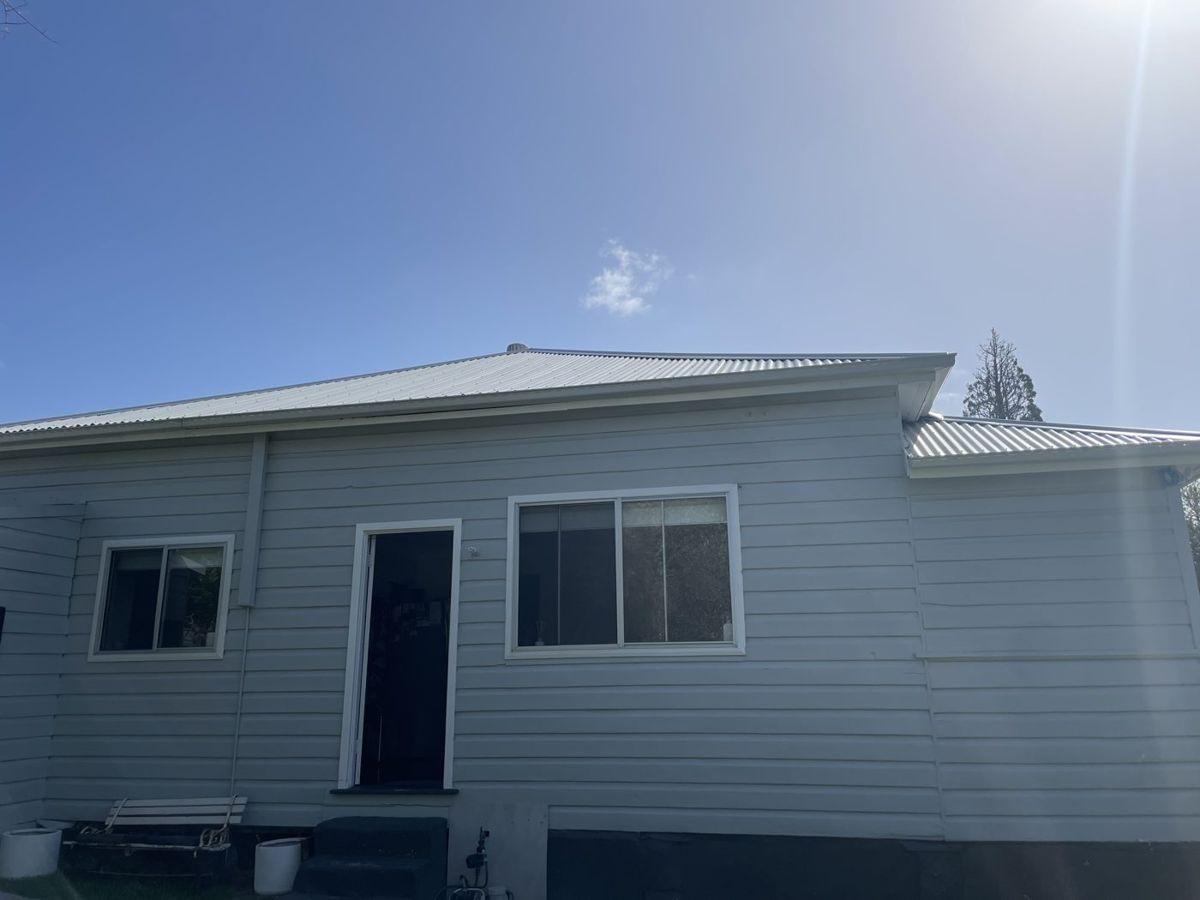
What's behind the cladding decides the job
Recladding an existing house is rarely just a matter of removing one skin and fixing another.
Removal and disposal of the existing cladding is a line item in its own right, and on older housing it's the one that carries risk.
Asbestos is the serious one. Fibre cement sheeting containing asbestos was widely used on Australian homes until the late 1980s. If your house is from that era and you're stripping the exterior, get the material identified before anyone starts. Removal is licensed work with strict handling and disposal requirements, and it is not something to discover mid-job.
The frame underneath. Cladding hides the wall structure. Once it's off, rot, termite damage or previous water ingress becomes visible — and has to be fixed before the new skin goes on.
Sarking and weatherproofing. Recladding is the one opportunity you'll get to improve the building's weather barrier and, if the wall is open, its insulation. Worth pricing while the wall is exposed rather than wishing you had — our insulation guide covers what wall insulation costs when the wall is already open.
Coastal exposure changes the specification
Within a few hundred metres of the water, material choice stops being aesthetic.
Salt-laden air accelerates corrosion in metal fixings and finishes, and degrades some materials faster than inland exposure would. Vinyl in particular can fade and crack more quickly in intense coastal sun. If you're near the coast, ask specifically about product grade and fixing specification rather than accepting the standard offering.
In bushfire-prone areas, the cladding material and its fire performance are governed by your BAL rating, and that constrains the options available to you regardless of preference.
Comparing cladding quotes properly
Trim, flashings, corner details and finishing work are frequently quoted separately from the cladding panels themselves. Two quotes that look different on paper are sometimes pricing different amounts of the job.
Ask each contractor to itemise: removal and disposal of the existing cladding, any asbestos testing or handling, sarking and weatherproofing, insulation if applicable, the cladding material and profile, trim and flashings, painting or finishing, and scaffolding or access equipment.
Then, as James's experience shows, compare them out loud. Our quote comparison tool lays them side by side and shows you what one has included that another hasn't.
Frequently asked questions
How much does it cost to clad a house in Australia?
Installed rates generally run $120 to $300 per m² depending on material and location — roughly $150 to $200 for vinyl and $180 to $280 for fibre cement weatherboard. Rendering is a cheaper alternative at $45 to $80 per m², with most whole-house render jobs landing between $8,000 and $35,000.
How much can I negotiate on a cladding quote?
Potentially a great deal. On one Newcastle job, quotes for identical scope came in at $3,500 and $6,500 — and the $6,500 company offered to do it for $4,000 once the homeowner told them where their price sat. Always get three quotes, and never treat the highest as fixed.
What if my house has asbestos cladding?
It's a real possibility on Australian homes built before the late 1980s. Identification, removal and disposal is licensed work with strict requirements, and it needs to be established before work starts rather than discovered during it.
Which cladding lasts longest in Australian conditions?
Over a full lifecycle including maintenance, sheet steel generally works out cheapest, followed by sheet ply. Fibre cement offers strong durability and fire performance. Vinyl is the cheapest install but can fade and become brittle under sustained UV. Near the coast, ask about grade and fixings specifically.
Should I insulate while the cladding is off?
If the wall is open, yes — the material is cheap relative to the labour, and that labour is already happening. It's the one practical opportunity to improve wall insulation without opening the wall specifically to do it.
Sources & further reading
- Quote comparison and first-hand account contributed by James, a homeowner in Newcastle NSW. Contractor names withheld.
- Australian per-square-metre cladding and rendering pricing cross-checked against 2026 published data from Australian cladding and carpentry contractors, including PC Carpentry Group, Adam Pro rendering and Australian trade cost guides.
- Asbestos identification, removal and disposal is licensed work in all Australian states and territories.
- Cladding material requirements in bushfire-prone areas are governed by BAL rating under AS 3959.
Got quotes already?
Line them up side by side with our free quote comparison tool — it shows the real spread, flags what one builder included that another left out, and gives you the questions to ask before you sign.
Cost ranges here are planning estimates that vary by region and home — see how we research and what our numbers mean, and always confirm with local, itemised quotes.