Foundation repair cost in Australia
Foundation repair spans an enormous range — $300 for a simple crack seal to $35,000 for underpinning — because "foundation problem" covers everything from cosmetic to structural. How to tell which one you have.

No other home repair category has a wider price range, and for good reason: a hairline crack in a rendered wall and a settling footing that's cracking plasterboard upstairs are both "foundation problems," but one is a $500 fix and the other can run into five figures. The first step is always diagnosis, not price shopping.
What it costs, by problem type
Foundation work spans an enormous range because the label covers everything from sealing a cosmetic crack to lifting and re-supporting an entire house. What you are quoted depends far more on which problem you actually have than on the size of the building.
Restumping is the common Australian job
On older raised houses, the most frequent structural-support job is restumping — called reblocking in Victoria and restumping in NSW and Queensland. It means replacing the stumps or piers the house sits on.
- A standard house typically runs $8,000 to $25,000, occasionally to $30,000 depending on stump count and site access.
- Per stump, commonly $500 to $700 installed. Concrete stumps are roughly $80 to $150 each in materials, galvanised steel $180 to $300.
- Raising the house during the work, common on Queenslanders, can add $15,000 to $40,000.
Soil classification under AS 2870 drives what your footings need in the first place, and reactive clay sites move more through wet and dry cycles than sandy or rock sites do. That is why two neighbouring houses can need very different work for the same visible symptom.
In declared mine subsidence districts — which cover much of Newcastle, Lake Macquarie and the wider Hunter, along with parts of the Illawarra and Central West — footing work needs additional engineering, reports and often pier upgrades, and it needs approval beyond council. Budget for the assessment before you budget for the repair. James’s account below is from exactly this situation.
Cosmetic vs. structural: how to tell
- Hairline cracks (under about 3mm), vertical, not growing are usually cosmetic — common in concrete as it cures and generally not a structural concern.
- Horizontal cracks, or cracks wider than about 6mm are more likely to signal pressure or structural movement and warrant a professional assessment.
- Doors and windows sticking, sloping floors, or plasterboard cracks upstairs alongside foundation cracks suggest the issue extends beyond the foundation itself.
- Water intrusion is its own category — often a drainage problem rather than a structural one, but left unaddressed it can worsen structural issues over time.
Many foundation repair companies offer a "free inspection" that's a sales visit — they have an obvious incentive to find (and price) a repair. An independent structural engineer's assessment costs a few hundred dollars and gives you an unbiased diagnosis before you commit to a company's proposed fix.
What drives the price within a repair type
- Extent of the problem. A single crack versus multiple points of settling changes both the method and the number of piers or brackets needed.
- Soil conditions. Expansive clay soils, poor drainage, or a high water table often mean the underlying cause needs addressing too, not just the symptom.
- Access. Repairs requiring excavation around the exterior of the home cost more than interior-only fixes.
- Method chosen. Underpinning, screw piers and slab re-levelling have different costs and are suited to different soil and settling conditions — a reputable contractor recommends based on your specific situation, not a one-size-fits-all method.
What happens during a structural repair
- Assessment and engineering (a separate visit, often 1–2 weeks before work starts). A structural engineer or foundation specialist diagnoses the cause and recommends a specific method — this step shouldn't be skipped or rushed.
- Excavation, for exterior pier work (1–2 days). Access holes are dug at each pier location around the affected area of the foundation.
- Pier installation (2–4 days for a typical job). Hydraulic or helical piers are driven to load-bearing soil or bedrock and used to stabilise or lift the foundation incrementally.
- Monitoring and adjustment (ongoing over days to weeks). Lifting a settled foundation is done gradually and monitored, not accomplished in one motion, to avoid new cracking elsewhere in the structure.
- Backfill, patching and cleanup (1–2 days). Excavated areas are filled back in and any interior cosmetic repair (patching, painting) happens last.
A simple crack seal is a same-day job. A multi-pier structural stabilisation can run one to three weeks depending on the extent of the settling and weather.
Mistakes that inflate the price or delay a real fix
- Hiring a repair company for the diagnosis. As mentioned above, a company that sells the repair has an incentive to find one — an independent structural engineer's assessment costs a few hundred dollars and removes that conflict of interest.
- Fixing the crack but not the cause. Sealing a crack without addressing poor drainage or grading around the foundation often means the same problem returns.
- Waiting too long on a confirmed structural issue. Unlike many home repairs, foundation settling can progress and cause secondary damage (stuck doors, plasterboard cracks, uneven floors) the longer it's left unaddressed.
- Skipping the warranty question. Reputable foundation repair companies offer a transferable warranty on structural work — this matters both for your protection and for a future buyer's confidence.
What a homeowner can safely handle here
Cosmetic hairline crack sealing with an epoxy or polyurethane kit is a realistic DIY project and won't make a structural situation worse if the crack is cosmetic. Anything beyond that — wall stabilisation, piering, underpinning, or any repair recommended after a structural engineer's assessment — is not a DIY project. These repairs affect your home's structural integrity, typically require specialized equipment and engineering judgment, and are usually backed by a transferable warranty that a DIY repair won't have, which also matters for resale.
A Newcastle homeowner's account
Here's a real example that shows how location-specific foundation costs can be. James, a homeowner in Newcastle, NSW, was developing a second dwelling on his block, and the region's coal-mining history added a cost most homeowners never budget for.
Newcastle and the wider Hunter region sit over former and current mine workings, so councils and certifiers often require footings and piers to be upgraded for mine subsidence before a build can proceed. On James's project estimate, that pier upgrade was budgeted at around $10,000, pending subsidence reports and investigations, entirely separate from the normal footing work.
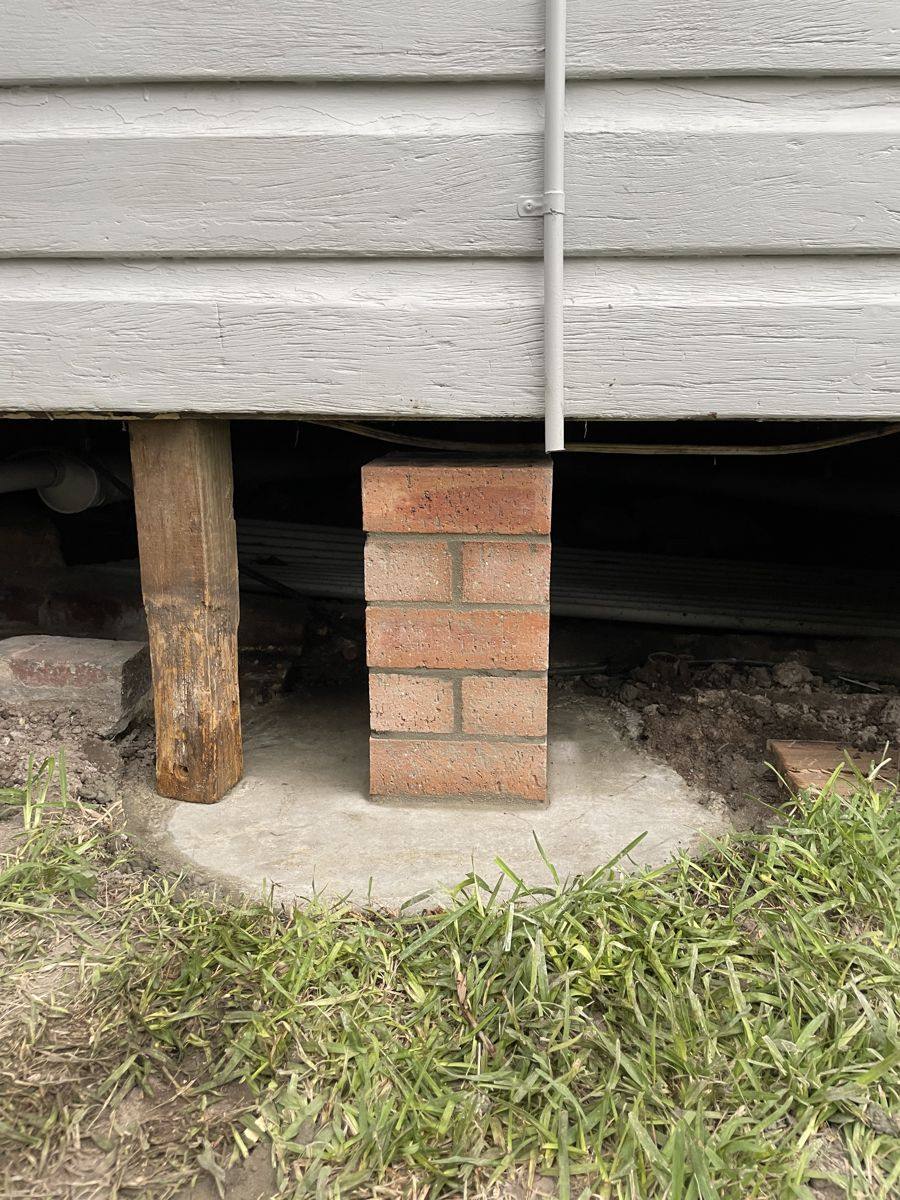
What lies under your block can matter as much as the state of your slab. In mine-subsidence districts (parts of NSW, and coalfield areas generally), expect additional engineering, reports, and pier upgrades that wouldn't appear on an identical house elsewhere. Always ask early whether your area has subsidence or reactive-soil requirements, because it's far cheaper to know before you design than to discover mid-build.
Frequently asked questions
Is foundation repair covered by insurance?
Usually not for gradual settling or soil-related issues, which most policies exclude. Coverage is more likely if the damage stems from a covered peril like a burst pipe. Check your specific policy rather than assuming either way.
Will foundation problems get worse if I wait?
Often yes, especially with active water intrusion or ongoing settling — delaying can turn a moderate repair into a major one. A professional assessment helps distinguish urgent from stable-but-cosmetic.
Does foundation repair affect home resale?
Unaddressed foundation issues are a major red flag in inspections and can complicate a sale. A documented, warrantied repair is generally viewed far more favorably by buyers than a visible, unrepaired problem.
How do I find a trustworthy foundation repair company?
Start with an independent structural engineer's assessment rather than a repair company's free inspection, then get quotes from companies that offer a transferable warranty and can explain why they recommend a specific method for your soil and settling pattern.
What causes foundation problems in the first place?
Most commonly: expansive clay soil that swells and shrinks with moisture, poor drainage or grading directing water toward the foundation, tree roots, or a home built on inadequately compacted soil. Fixing the underlying cause, not just the symptom, is what prevents recurrence.
How much settling is "normal" for an older home?
Some minor settling is common and often cosmetic, especially in homes over a few decades old. The distinction isn't age but whether the settling is active and progressing or has stabilized — a structural engineer can measure this, which is why professional assessment matters more than the home's age alone.
Sources & further reading
- First-hand account contributed by James, a homeowner in Newcastle NSW, covering pier work on a property in a former mining area.
- Crack assessment and repair method should be determined by a qualified structural engineer, as the appropriate approach depends on soil conditions and the specific structure.
- In mine subsidence districts, footing and foundation requirements are set by Subsidence Advisory NSW and equivalent bodies in other states.
- Insurance coverage for foundation-related damage varies significantly by policy and cause. Confirm terms directly with your insurer.
Got quotes already?
Line them up side by side with our free quote comparison tool — it shows the real spread, flags what one builder included that another left out, and gives you the questions to ask before you sign.
Estimates for planning only, not a professional assessment of your project — our editorial standards explain how we research. Confirm your real cost with local quotes.